


Coercing Faith Violates Human Dignity

Both 250 Years Ago and Now

The use of coercion to limit or enforce religious belief is a daily reality for millions of people. But it is hardly new. History is replete with examples across cultures, countries, and centuries.
When America’s founders began building our new nation 250 years ago, the coercion of religious belief was an animating concern. Their response helped forge strong protections for religious liberty that have benefited our nation.
Decades later, when the drafters of the ICCPR developed Article 18, they again singled out coercion as a particular threat to freedom of religion or belief.
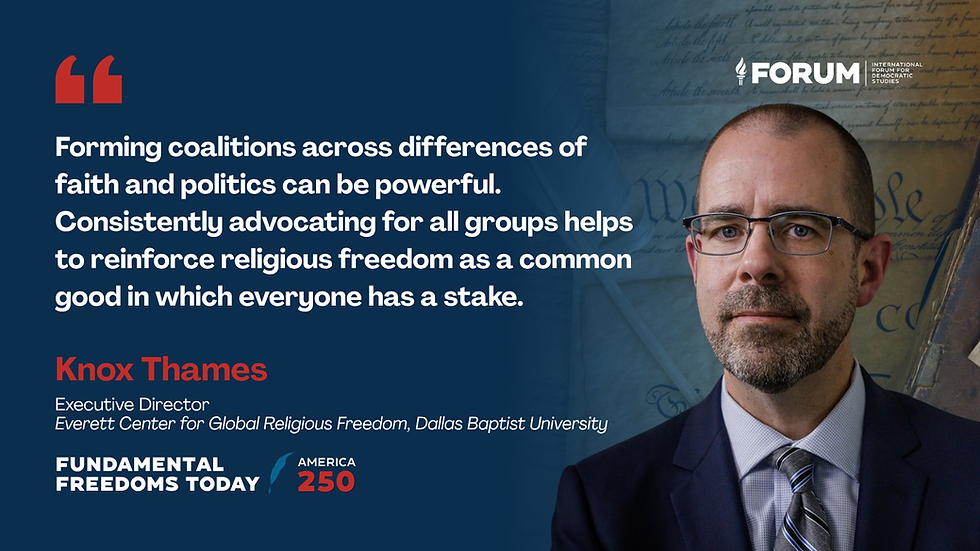
Yet the challenge remains today. I appreciated the International Forum for Democratic Studies and the National Endowment for Democracy providing the opportunity to explore how we can respond more effectively to the various forms of coercion that attempt to control what people believe or practice.
You can read my article here.




I was more interested in understanding the payment procedure than simply reaching the next screen, so I spent a little extra time reviewing the https://raxi.top/. The information made more sense when considered one section at a time, especially for someone unfamiliar with the platform. Aarti prefers reading the available instructions before making any account transaction, and I think that is a practical approach. It helps users understand the requirements instead of treating the process like a rushed form.